
Extract. Verify. Assure.
Extraction, verification, and control in one workflow: three steps between the document and the decision, with your team in charge of the outcome.
Manual processes limit capacity and consistency.
Incoming documents vary in format and structure
Repetitive document tasks consume staff time
Consistency falls as volumes grow
Document extraction and data structuring.
Reads scans, photos, forms, and handwriting, including foreign-language documents, in one workflow. Every field is returned with a confidence score and its location in the source document.
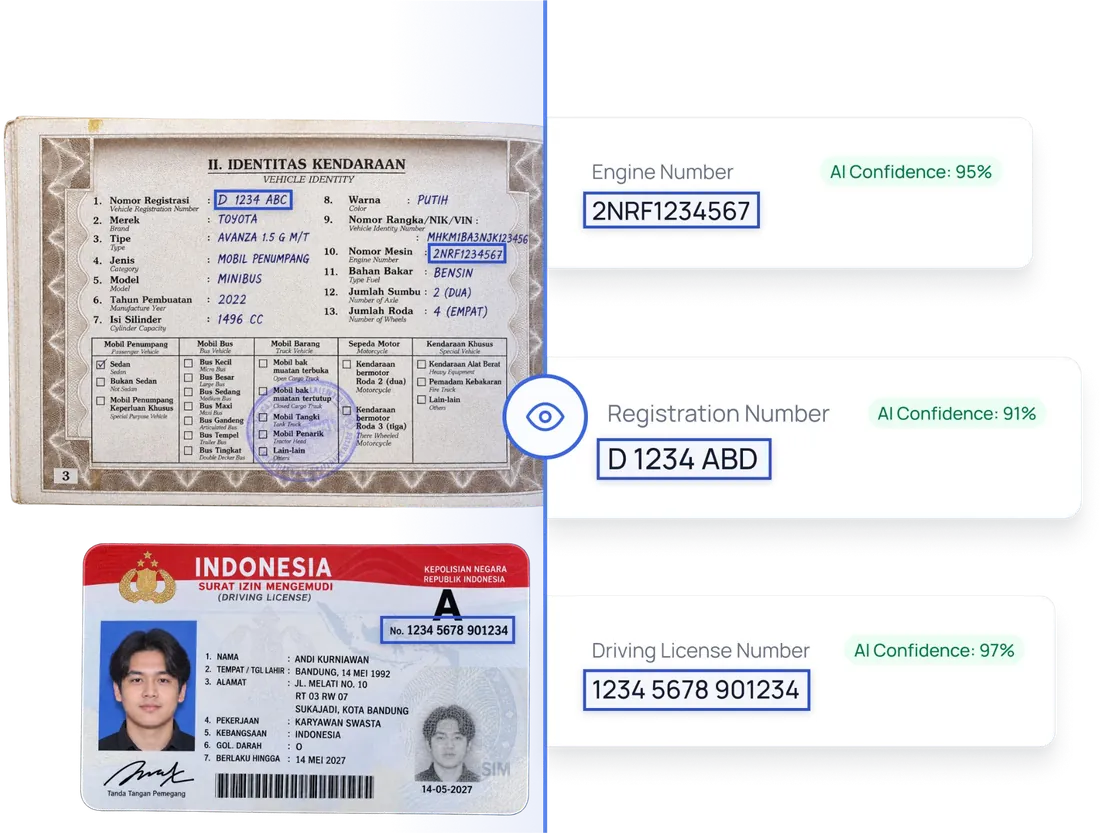
Reads printed text, handwriting, stamps, photos, and scans in PDF, JPG, PNG, or TIFF within a single submission.
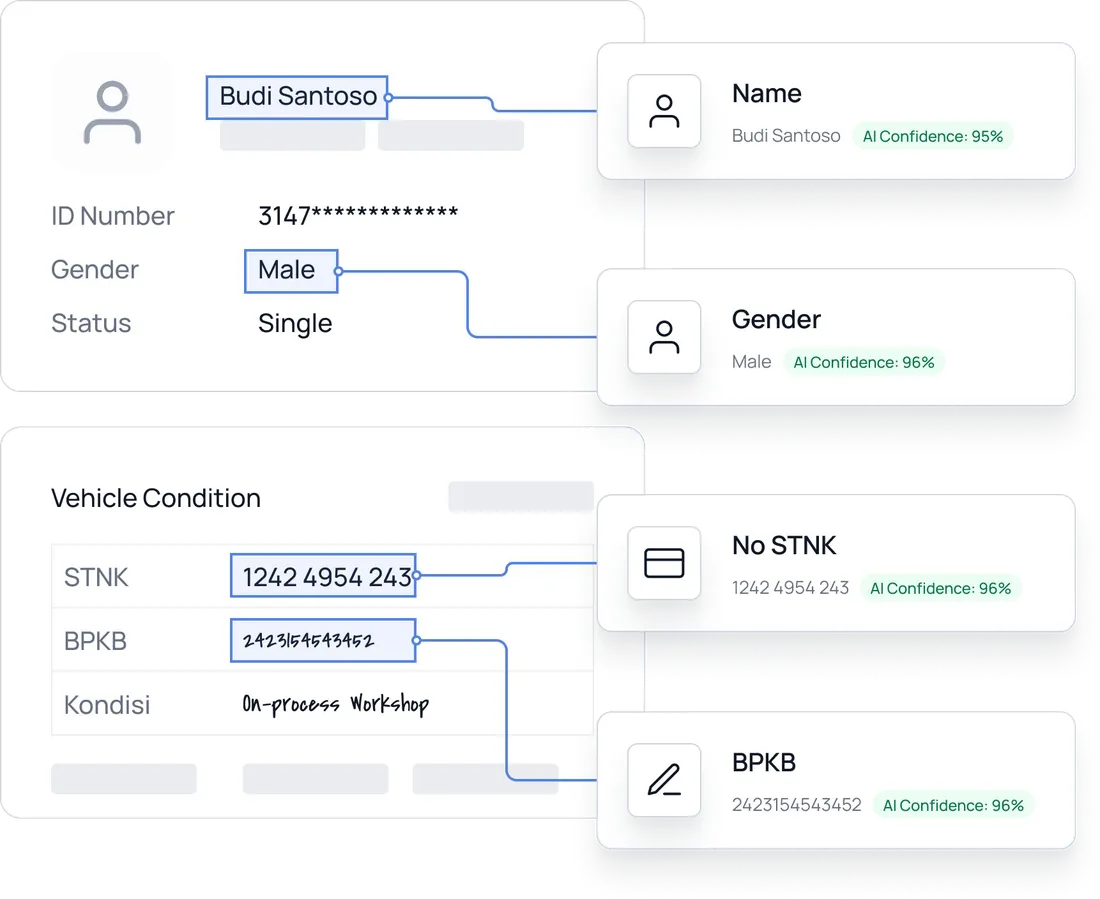
Produces consistent data fields aligned with an agreed schema. Information outside the schema is retained as supplementary data.
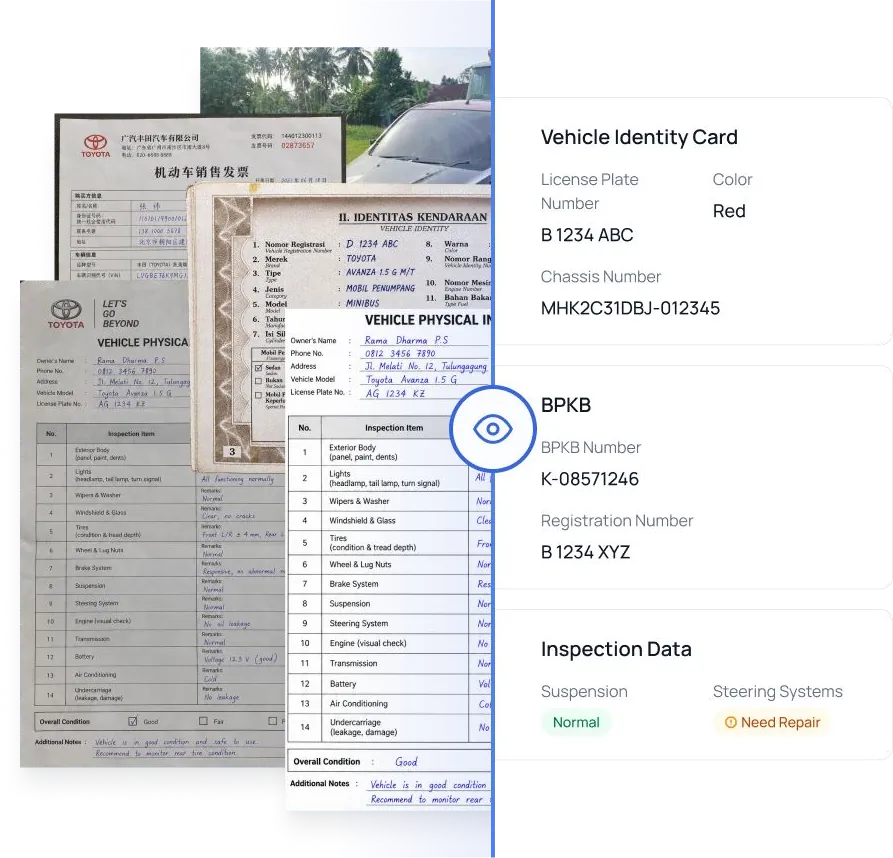
Matches chassis, engine, ownership, and validity across vehicle registration, ownership, and identity documents before underwriting review.
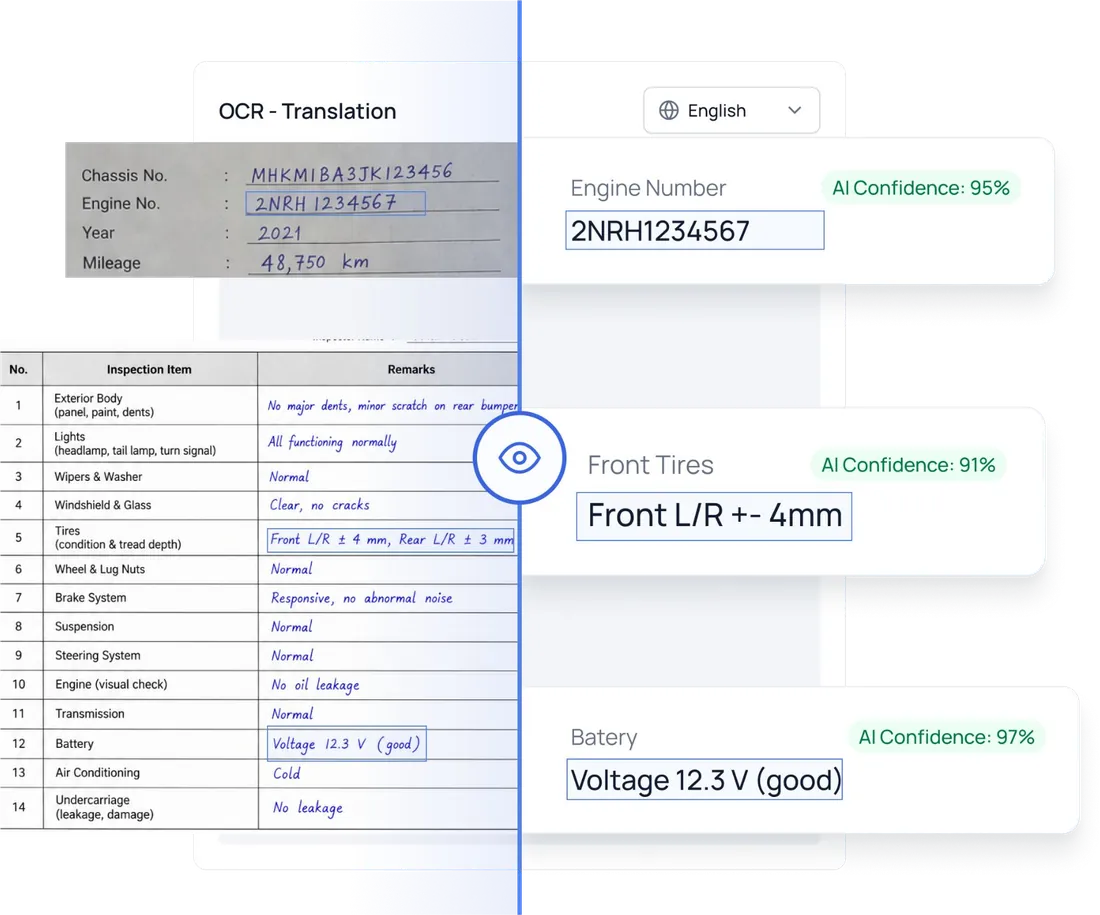
Reads handwriting and expands abbreviations, flags unclear text for review, and applies stricter thresholds to critical fields.
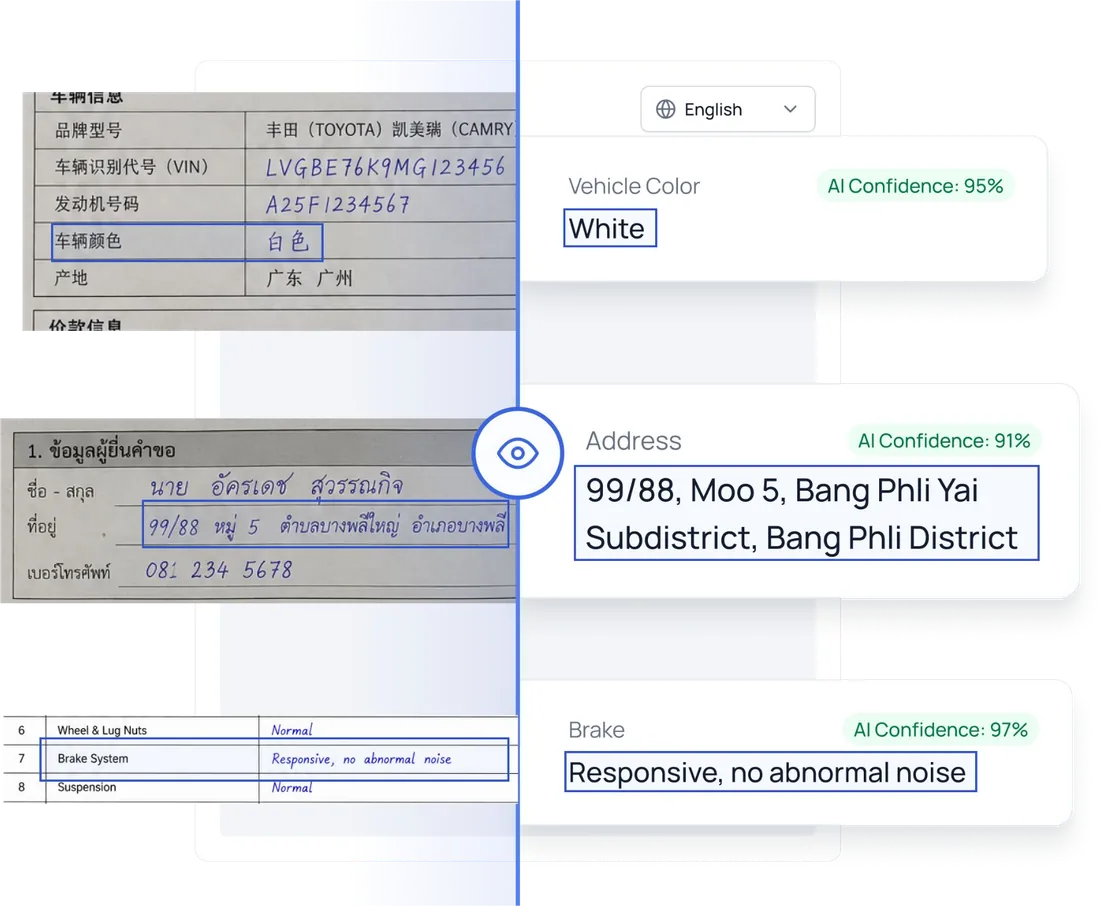
Reads shipping documents in Chinese, Japanese, Korean, and Arabic, and delivers the data in an agreed output language.
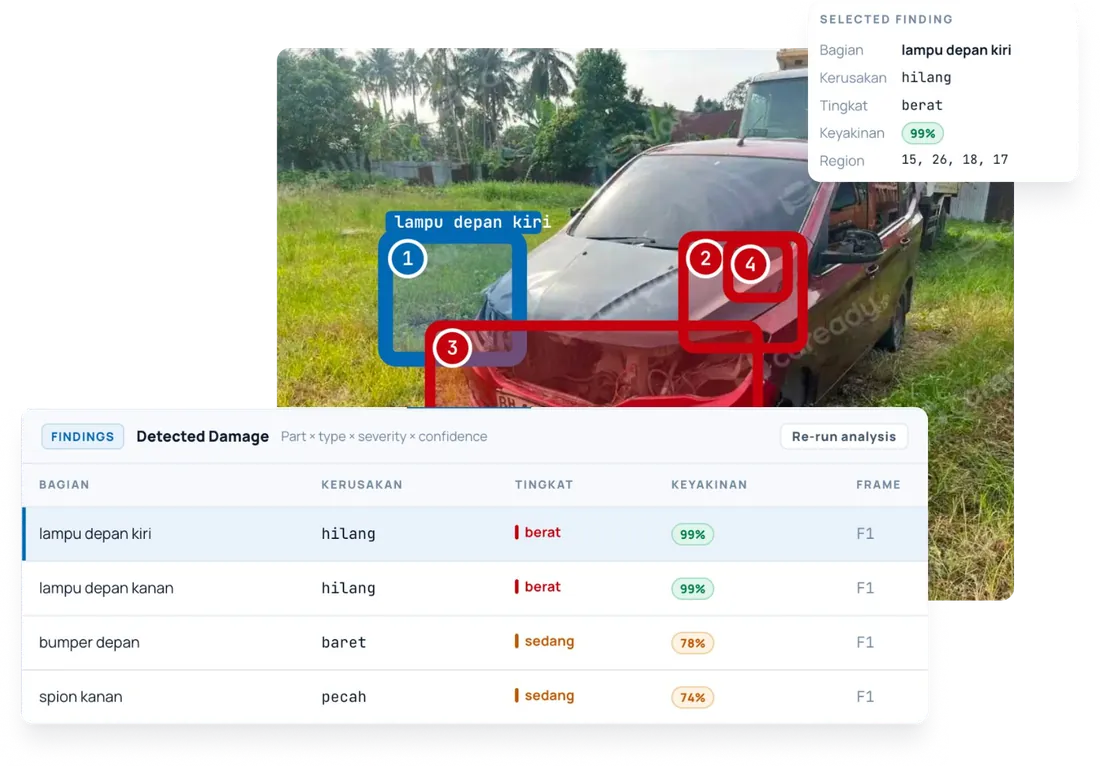
Identifies damaged components, damage type, and severity, with confidence scores and source photos for verification.
Verification and credit analysis support.
Checks each file against product requirements and reference sources, matches identity and income across documents, and shows both values when they differ. Credit decisions remain with the analyst.
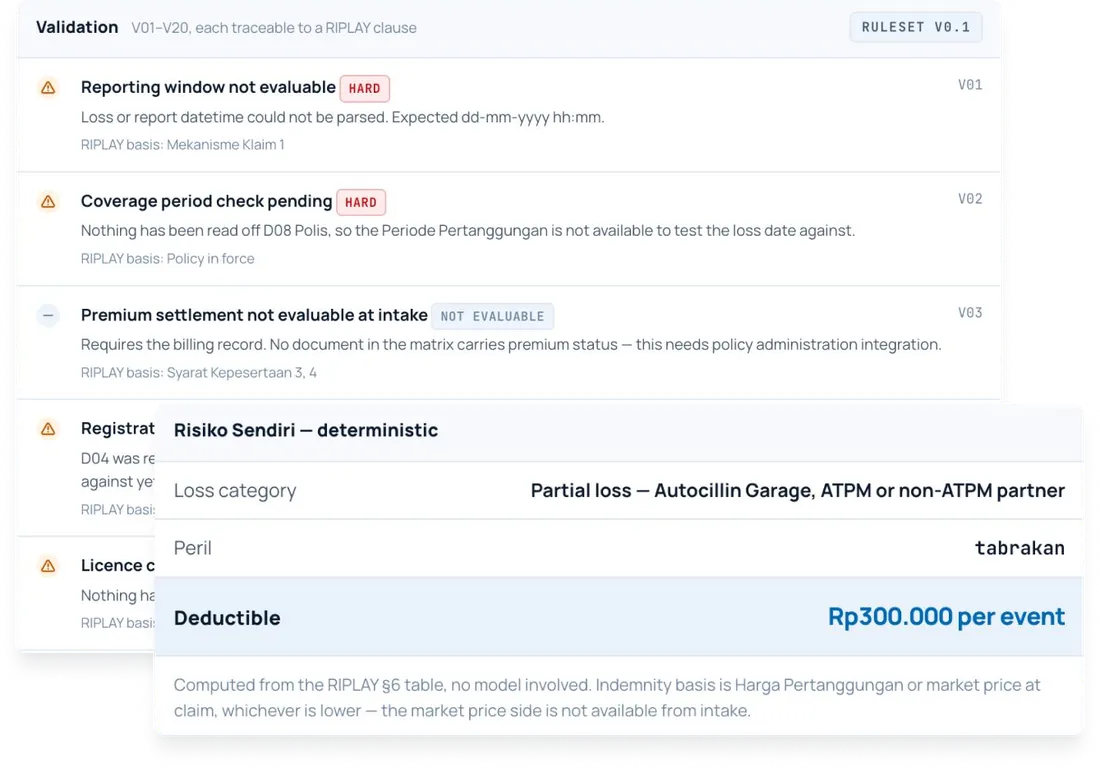
Checks policy validity, waiting periods, exclusions, coverage territories, and deadlines against policy terms, separating blocking findings from warnings.
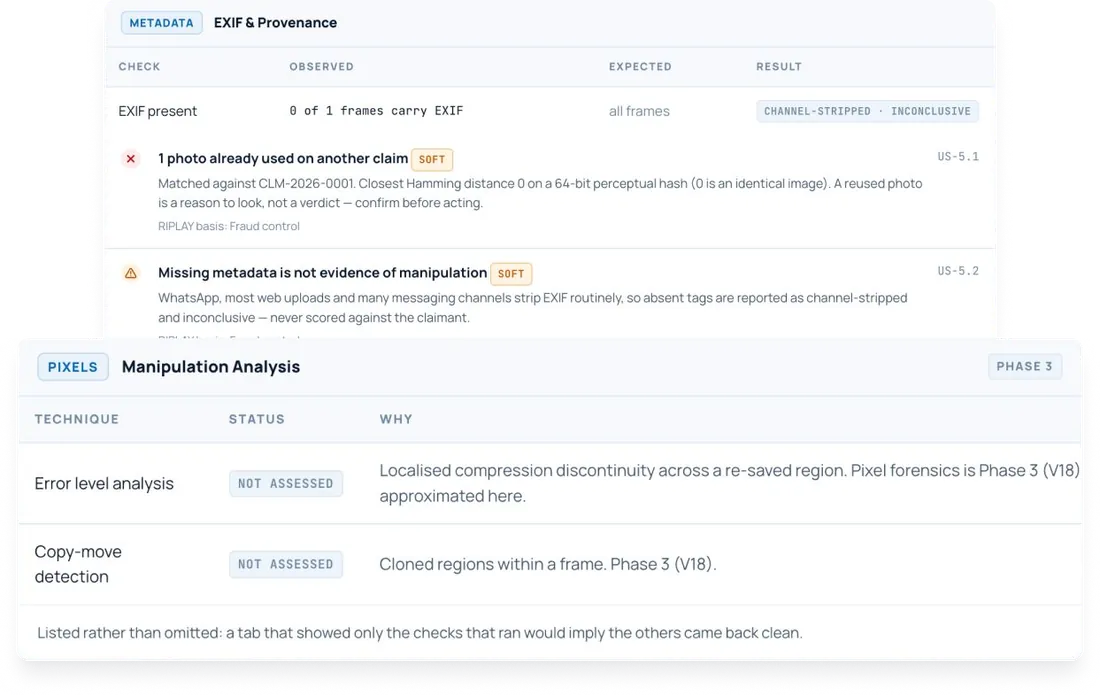
Compares photos with previous claims and identifies suspected alterations. Missing metadata is flagged as inconclusive, never as fraud.
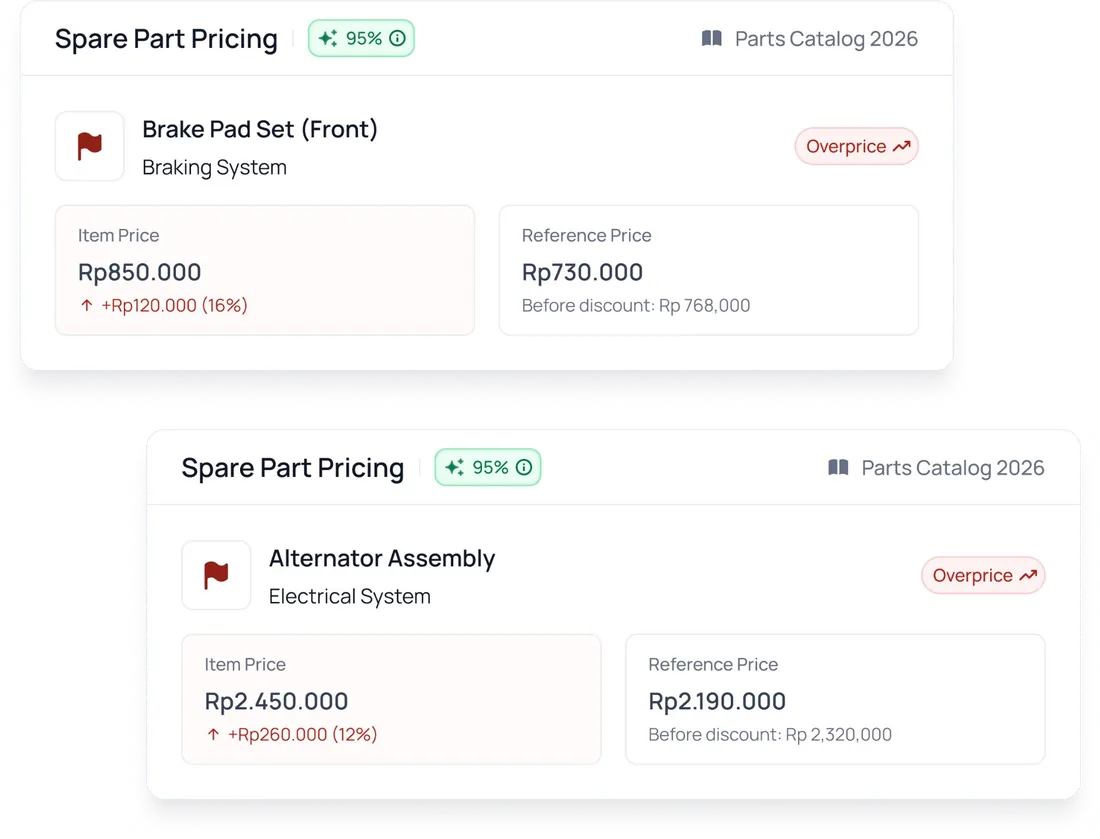
Matches invoice line items against digitized rate schedules and parts catalogs, and shows variances against the tolerance limits you set.
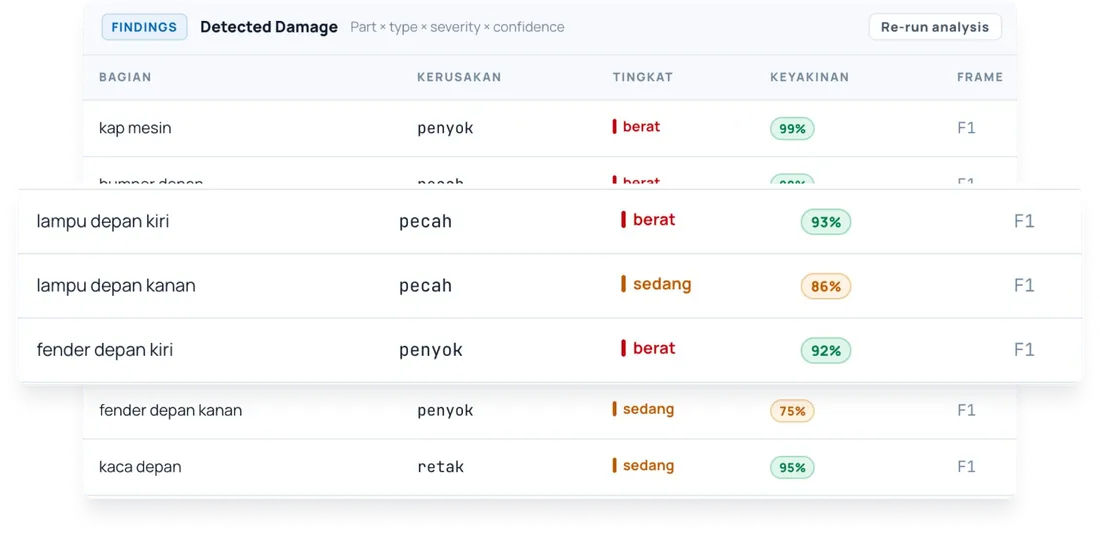
Summarizes each component as GOOD, FAIR, or POOR, with damage severity, confidence scores, and source photos.
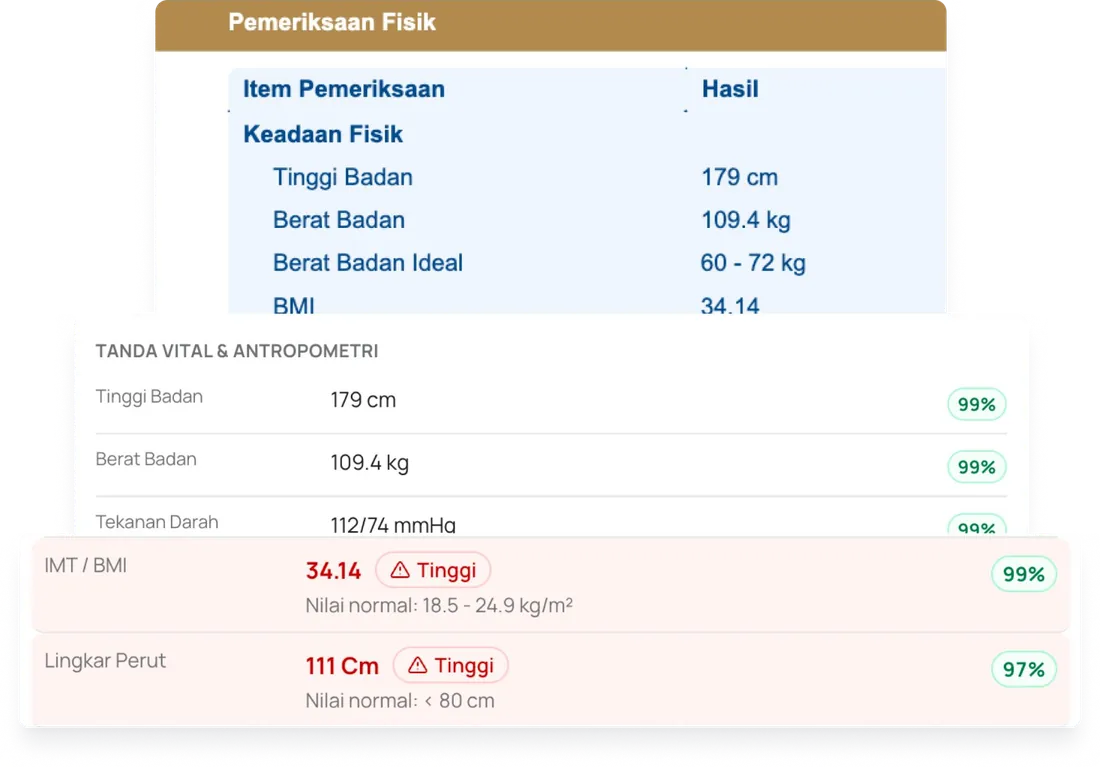
Reads test names, values, units, and reference ranges from medical reports, and flags out-of-range results for review.
Control, audit trails, and analytics.
Routes low-confidence results to a reviewer, records every extraction, change, and decision, and shows workload, confidence, and processing time in one dashboard.
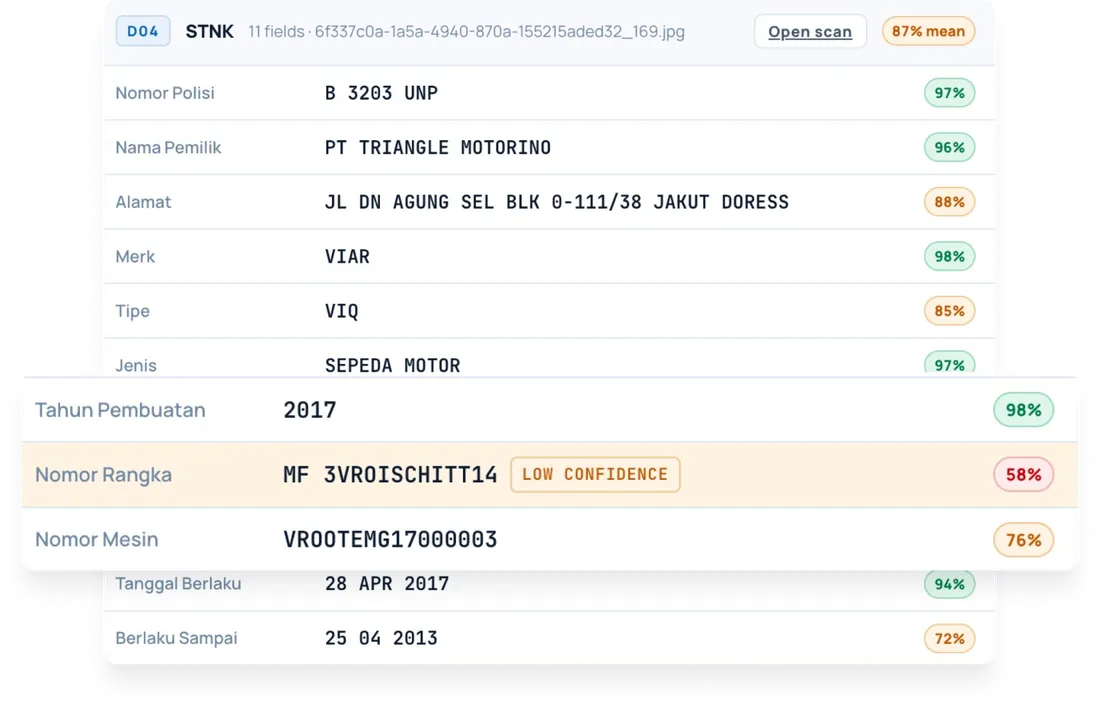
Routes results below configured thresholds, such as 0.80 or 0.90 for critical data, to reviewers. Authorized staff retain responsibility for decisions.
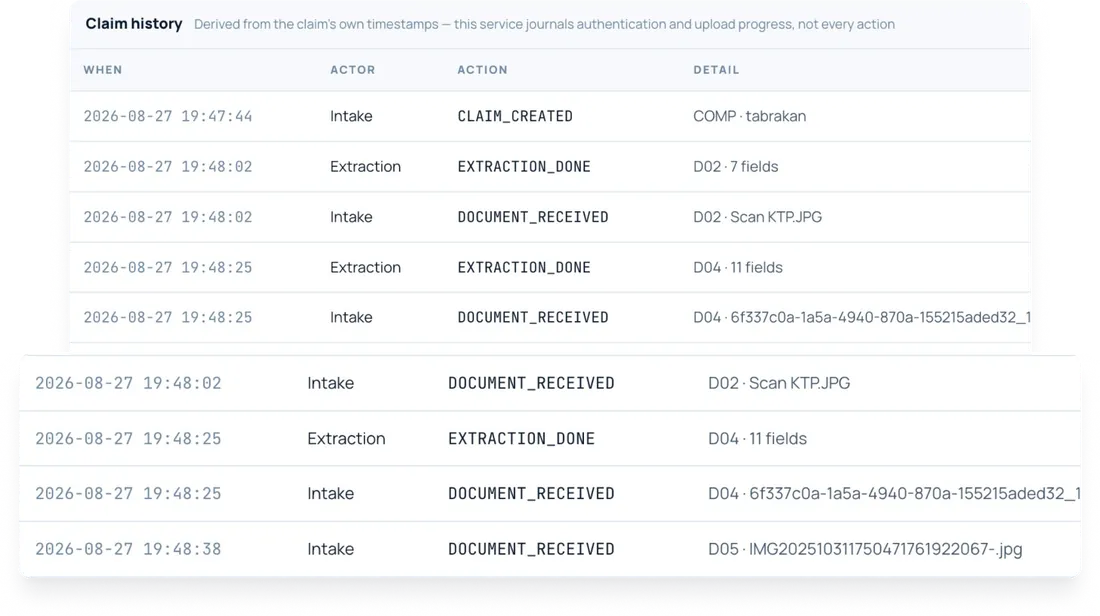
Logs extraction, changes, routing, and exports with the applications and users involved, retaining every original value and confidence score.
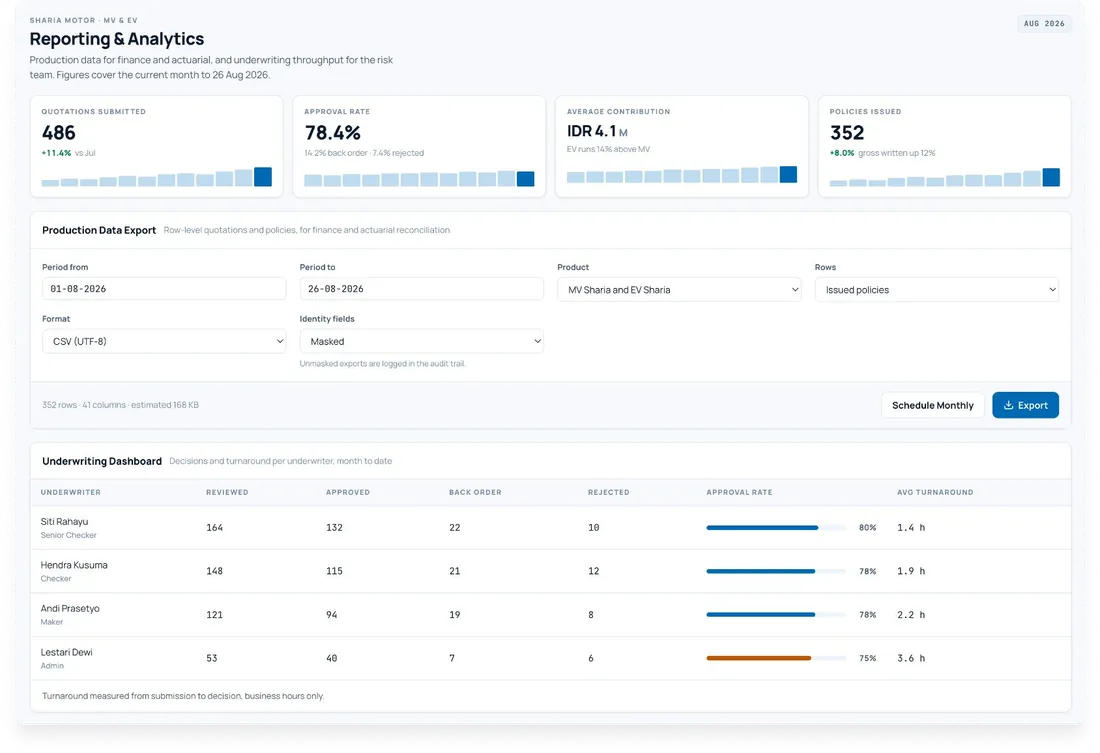
Tracks volume, p95 processing time, flagging and correction rates, and reviewer workload, with masked CSV exports for finance, actuarial, and audit teams.